Every single time.
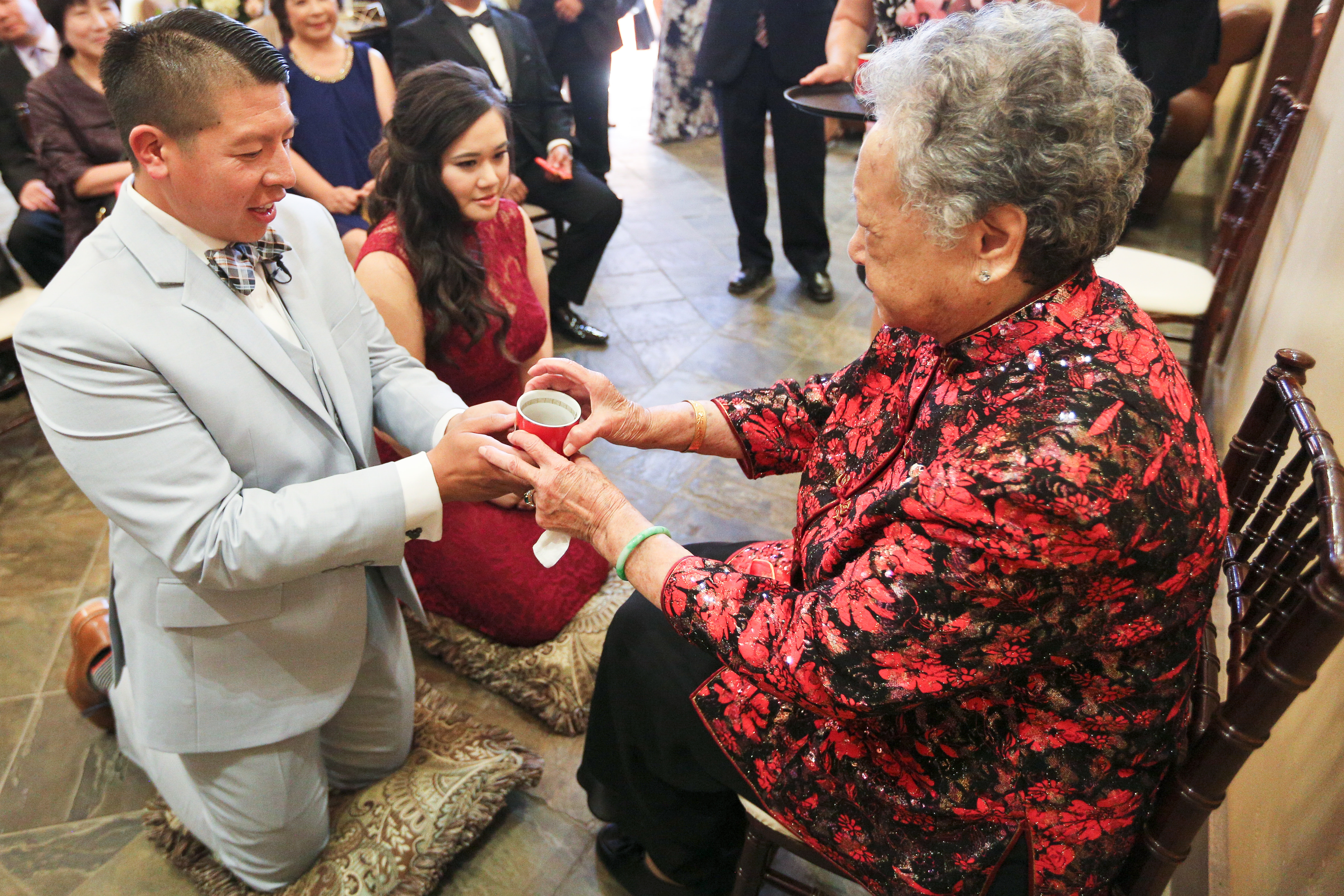
Didn’t matter if I’d seen her a week ago or a year ago. Mah Mah — Cantonese for paternal grandmother — had her questions and she asked them every time. Same order. Same tone. No small talk, no warm up. Just the checklist.
Are you a good boy? Did you work today? How much are you working? Save your money. Learn Chinese.
She never said it in English. Could she? Probably. But she wouldn’t. Not with me, not ever. She kept the customs, the traditions, the things you don’t let go of no matter where you end up. If I wanted to reach her I had to come to her.
My Gung Gung — Cantonese for maternal grandfather — held on differently. He built his American dream from nothing. Learned the language. Created a life here that gave his family options. But he never let us forget where that life came from. He took us back to his village in Guangzhou. Not to sightsee. To remember. To stand in the place our family came from and understand that we didn’t appear out of nowhere. Family was everything to him. That was his way of holding on.
Two different people. Same fear underneath. Don’t let this disappear.
If you’re ABC — American Born Chinese — you probably know exactly what I’m talking about.
I grew up in the East Bay of the Bay Area. Chinese was largely absent in our house. My parents didn’t speak it to me. The neighborhood didn’t reinforce it. School certainly didn’t. The environment I grew up in wasn’t built to preserve what Mah Mah was trying to keep alive. So the language slipped. Not because I chose to let it go. Just because nobody around me was holding it either.
Except her.
She was the last line. And she held it the only way she knew how. By refusing to cross to my side. Every question in Cantonese. Every tradition kept. Every visit ending the same way it started — with the checklist. She wasn’t going to make it easy for me to forget. Even when everything else around me was making it very easy to forget.
For a long time I heard her but didn’t really listen.
It wasn’t until my late 20s — around the time I got married, around the time I started thinking about what kind of life I was actually building — that it started to land differently. My wife is also ABC. But she can speak Cantonese conversationally. She could talk to Mah Mah in a way I never could. And watching that — being on the outside of a conversation that should have been mine — woke something up in me that I hadn’t paid attention to before.
I still rely on her sometimes. To order food. To navigate Hong Kong. To bridge a gap that I should have closed myself a long time ago. And every time I do, I feel it. Not embarrassment exactly. More like a quiet guilt. A reminder that someone spent her whole life trying to hand me something and I didn’t reach back hard enough.
Mah Mah knew. She always knew.
That’s why she kept asking.
There’s a place I keep longing for.
Hong Kong.
Not a place I grew up in. Not somewhere I can fully claim yet. More like a dream I keep returning to. The pace, the noise, the food, the energy — all of it pulls at me in a way I can’t explain and don’t really want to. It’s where Mah Mah’s world actually lives. Where the language she refused to drop is spoken on every corner. Where everything she was trying to preserve still exists in the streets and the markets and the way people move through the city.
I have an opportunity to put down roots there one day. That pull is real. So is the longing.
Until someone speaks Cantonese to me.
They always do. Because I look like I should know. And there’s this moment — visible, uncomfortable — where the gap between who I feel like and what I can actually prove becomes very clear. I look Chinese. I feel Chinese. But I can’t hold the conversation that would make that real to anyone standing in front of me.
That’s the ABC gap. You know who you are on the inside. The outside doesn’t always match.
And here’s what I’ve realized. That gap doesn’t close on its own. It either grows or you do something about it. The more assimilated the outside looks the easier it is to convince yourself the inside doesn’t need attention. I grew up in a house where the language was absent. I live in a world where nothing around me requires me to be Chinese. It would be very easy to let it go completely.
I’m not going to.
Both are mine. The American part and the Chinese part. I’m not choosing and I’m not apologizing. But I’ll be honest — the older I get the louder the inside gets. The more I understand what both of them were trying to do. Gung Gung through family and roots. Mah Mah through language and tradition. Neither of them wanted this part of us to disappear into the American version of success.
Mah Mah asked the same questions every single time she saw me like she knew — she always knew — which one was most at risk of slipping away.
Learn Chinese.
She passed away this past October.
I keep thinking about that last one. The one I never finished. The one she kept bringing back every single time like a quiet reminder that some things don’t wait forever. She was the last line. And now she’s gone.
She’s not here to ask me anymore. And somehow that makes it louder, not quieter.
Maybe I’ll learn Chinese.
But I know what she’d say to that.
Are you a good boy? Did you work today? How much are you working? Save your money. Learn Chinese.
She’s not here to ask me anymore. But the longing is still here. For the language, for the roots, for the part of me that never fully arrived but never fully let go either. I’m still figuring out what it means to be Chinese on my own terms. That’s not going away. If anything it gets louder every year.
Maybe that’s where it starts.


Leave a Reply